Post Summary
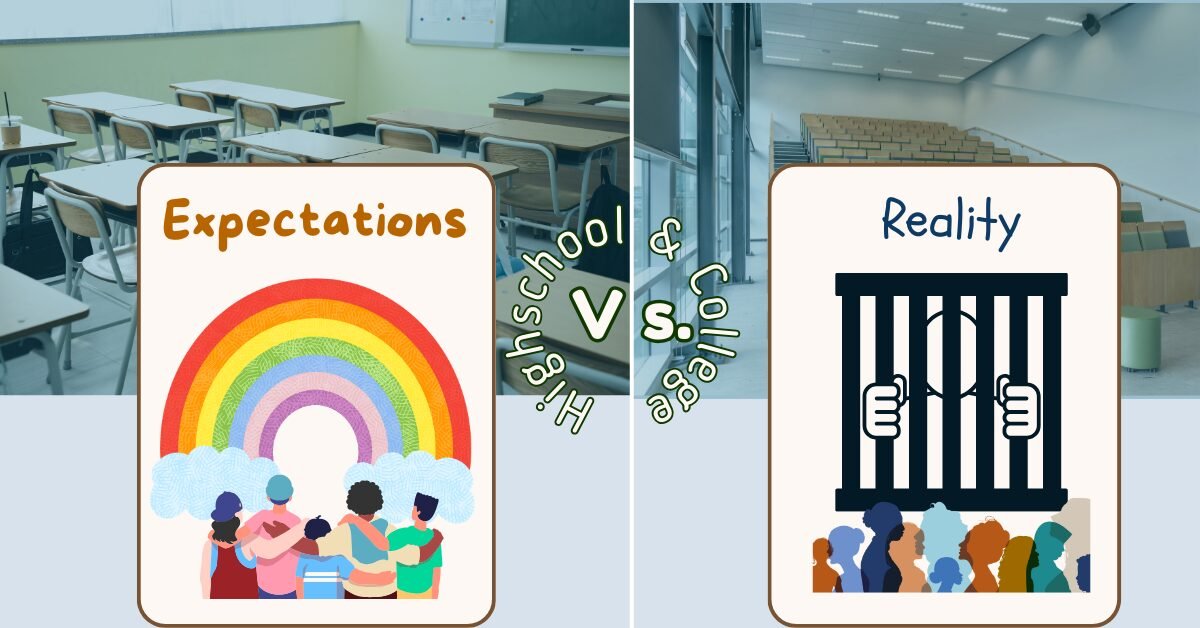
From movies and TV shows that glamorize the experience to the endless list of school events and stereotypes, students are sold a version of school life that rarely matches reality.
It explores how the education system often fails to prepare young people for real-life responsibilities, focusing instead on traditions, rewards, and outdated structures. This post argues that instead of glorifying these years, schools should prioritize teaching life skills and creating a more efficient, practical system that actually serves students in the long run.
Table of Contents
- Introduction
- The Facade
- Personas and Life After
- All the Events
- The Reality of the Situation
- The Oblivion After Graduation
- Conclusion
Introduction
I’ve been pondering this topic since my freshman year of high school. What’s up with the hype around high school and college—especially here in America?
They’re often portrayed as “the best years of your life,” a time to be young, free, and able to make mistakes with minimal consequences. But the reality is…
Our education system is outdated, flawed, and in desperate need of restructuring.
So why are we still supporting an education system that so many people agree doesn’t fully prepare us for life?
The Facade
From a young age, we’re fed media that glamorizes this stage of life—movies, TV shows, and social media clips that make it seem like nonstop fun, drama, and excitement.
With tons of movies and shows from Disney and Nickelodeon painting High school as a magical four years, and college as a life-changing experience where you’ll “find yourself.”

Other shows take the opposite approach, painting high school with extreme drama and unrealistic situations—like the chaos in Euphoria—that most students will never actually face.
At the same time, real life is nothing like the worlds of High School Musical or Gossip Girl. These are just a few of the many movies and shows that have shaped how high school and college are imagined like:
- Degrassi: Next Generation
- 13 Reasons Why
- Clueless
- Mean Girls
- The Breakfast Club
- Grown-ish
not even counting the billions of others floating around Netflix or other streaming platforms that glamorize this specific time period of our lives.
Personas and Life After
We’ve built entire stereotypes for students—cheerleaders, jocks, nerds—each with it own set of negative assumptions, but in reality, most people don’t fully fit those labels.
Some adults look back on high school as “the best time of their lives,” while others barely talk about it. Later in life it becomes clear: what you did in high school doesn’t actually matter all that much.
All the Events
Homecoming, prom, spirit weeks, clubs, sports, field days, award ceremonies, pep rallies…
For your senior year, theirs even more you anticipate attending: senior sunrise and sunset, graduation, senior skip day, college decision shirt day, senior field trips…
(Although I personally believe students should be celebrated and rewarded throughout their entire high school experience—not just in their final year.)
While these things can be fun, they are still just distractions from the real reason we go to school: education and learning.
That’s not to say students shouldn’t be celebrated, but it’s questionable when schools seem to prioritize these events over creating a healthy learning environment.
On the flip side, schools that over-police “culture” can go too far, punishing students unnecessarily…
The Reality of the Situation

Students are often depressed, burnt out, and ill-prepared for the real world after graduation.
The school system was originally developed as a way to keep kids busy and in a “safer environment” after child labor laws were enforced—not necessarily to prepare them for life.
In todays modern society the effects of this have began to really show and hurt younger generations success as adults in the future.
In some ways, the k-12 education system operates more like a prison- structured to have children learn how to be controlled rather than a an educational one where they learn how to live independently.
The Oblivion After Graduation
When you’re graduating high school, your choices are usually presented as:
- Go to college
- Get a job
- Attend trade school or something similar
Even if you go to college their is still so much you may not know how to do even after your finally graduated. Left even more stuck then you were at 18.
There’s barely any talk about how to live on your own or how to actually just be an adult—budgeting, credit, debit cards, finances, job interviews, renting an apartment, insurance, transportation—unless you’re lucky enough to have a class on it.
Meanwhile, high schools always make time to schedule college application help sessions. Including requiring students to write Common App essays for a grade in their English classes—even if they’re not planning on attending college.
Conclusion
The things we should be glamorizing are the skills that prepare every student to live independently and thrive—without falling into debt right after turning 18.
College shouldn’t just be handed out as an automatic escape into adulthood; It should be a tool for gaining knowledge in a chosen field, not a four-year holding space for the undecided.
And high school, with the way it’s currently structured, is mostly a drawn-out span of time that doesn’t deserve to be glamorized.

The fact that a homeschooled student can often finish two or more years earlier than the average K–12 student says a lot about how inefficient the system truly is.
Everyone in power to make a change in government that including even the average person, needs to wake up!
It’s time to stop glamorizing these years as if they are going so smoothly for the younger generations today, and start making them actually valuable.
Be a part of the change, my fellow anomalies. Stay Anomalous. Signing off…
Amirah
Follow For Updates on Future Content
Pintrest: @theanomalysjournal
Instagram / Facebook : @urgirlamirahjocelyn
Spotify: @theanomalyspodcast
Youtube: @ajamadmired


Leave a Reply to Daring to Be Different: A Guide to Traveling the World After High School – The Anomalys Journal Cancel reply