

Post Summary
Taking a gap year after high school is often seen as unconventional in America, but in many parts of the world it’s a celebrated step into adulthood. In this post, I share my journey as a high school senior planning to travel instead of going straight to college. From the lack of resources and support for non-traditional paths to the personal challenges of planning solo travel, I dive into why more young Americans should be encouraged to explore beyond their hometowns.
I also break down practical steps for making a gap year possible, including how to choose a destination, budget effectively, and use travel apps and programs that save time and money. This guide is here to prove that travel after high school is not only possible—but valuable.
Table of Contents
- Introduction
- The Lack of Resources for Non-College Paths
- My Personal Experience
- Breaking Away From the College-Only Narrative
- Gap Year Travel 101
- Choosing a Destination
- Finances
- Apps & Resources
- Final Thoughts
Introduction
As a high school senior in America planning to spend a year (or more) traveling the world after graduation—rather than taking the traditional college route—I’ve come face to face with how uncommon it truly is.
In Europe and other parts of the world, a gap year is considered a normal and even celebrated step into adulthood- but not in America.
Why is that the case?
The Lack of Resources for Non-College Paths
As someone who isn’t immediately planning to attend college, I’ve noticed there are significantly fewer scholarships, internships, volunteer opportunities, and even discounts for young adults not enrolled in school.
We already have limited money and experience, it’s hard enough to live on your own—let alone think about traveling overseas being possible.
The stereotype that Americans are less cultured or socially aware, especially when traveling internationally, may tie into the fact that the U.S. is so self-contained.
50 states all unique yet still deeply similar, it’s easy to stay inward-focused. We bring other cultures to us and expect assimilation, rather than encouraging citizens to go out and experience the world for themselves.
Witch begs me to ask: why aren’t there more programs and organizations helping young people—especially those not in college—venture out and explore other countries?
Other nations encourage their citizens to visit or live in the U.S., but here, the same push outward doesn’t seem to exist.
If we want to challenge stereotypes and build a generation that’s more globally aware, we need to create more opportunities for all young adults to connect with the wider world.
My Personal Experience
I used to live in the second-largest city in Massachusetts, where multiple languages were spoken in my high school and cultural clubs were abundant. But when I moved to a more rural area, I was surprised with the fact that my guidance counselor had no experience helping a student plan a gap year abroad.
With little guidance, I had to rely on my own research. A few Google and Youtube searches gave me some information, but overall I realized I was largely on my own.
As a soon to be 18-year-old solo female queer traveler, I’ve discovered that even budget traveling online resources can be limited, making it difficult (and expensive) to plan my travels overseas.
Breaking Away From the College-Only Narrative
Still, in high school, we’re constantly pressured to “figure out” what we want to do for the rest of our lives.
Junior year is filled with college searches, SAT prep, GPA stress, and endless conversations about what school we’ll attend—yet very little focus is placed on developing real-life skills or exploring alternative paths.
I dive into this more in my blog post + podcast episode: Why is High School and College So Glamorized? (check it out after reading this post!).
Like many of my peers, I spent months researching colleges, making and remaking lists of “top schools,” and stressing over acceptance rates. But deep down, I knew I wanted something different.
Wasting hours planning a future life I didn’t truly want was discouraging.
So I shifted my focus. Instead of obsessing over a path that didn’t excite me, I started planning a life that did. Yes, it is scary and overwhelming, but the more actions I take towards my dreams, the more attainable they begin to feel.
Gap Year Travel 101
Here I will share some of what I’ve learned planning my gap year so far, saving money, and finding resources that make traveling young seem more possible—especially for those of us who feel underrepresented in this journey.
However, I hope to create a more in depth guide in the near future and share my experiences traveling.
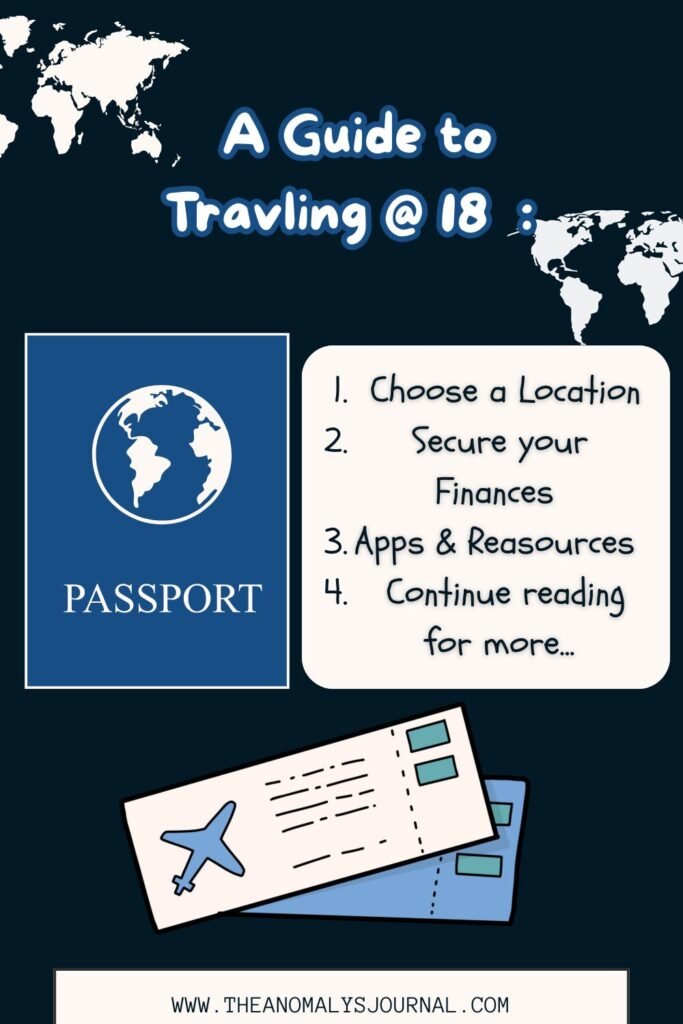
1. Choosing a Destination
The first step is simple: you need a place to go. If you already know where you’d like to travel, build from there. If not, consider program options, search for the cheapest flights, or even use a random destination generator if you’re flexible.
Here are some programs worth exploring if your on a budget:
- Workaway.com
- Worldpackers.com
- TrustedHousesitters.com
- Couchsurfing.com
- Theinterngroup.com
- helpx.net
- bewelcome.org
- couchers.org
- trustroots.org
I’ve also found searching google maps and emailing hostels / business directly on if they except work exchange volunteers effective for finding somewhere to stay! (added August 24, 2026)
2. Finances
Traveling isn’t as expensive as many people think—but you do need a plan. Here’s how I approached it:
- Research the average daily cost of living in your destination (I used Budgetyourtrip.com).
- Multiply that by the number of days you plan to stay for an estimated total amount of money needed.
- Set a realistic savings goal.
For me, I set $10,000 as my savings target. I then worked backwards, breaking it down by how much I’d need to save each month, week, and day. This made the goal much less intimidating.
To make $10,000 in 1 year you only need to save ~$27 a day!
Other financial tips:
- Open a savings account dedicated to travel.
- Pay yourself first whenever you get paid.
- Get a travel-friendly credit and debit card to avoid high fees abroad.
- Cut unnecessary expenses like subscriptions.
- Pick up a part-time job, freelance work, or sell unused items for extra cash.
3. Apps & Resources
Here are some of the best tools I’ve found for saving money, booking accommodations, and making travel smoother:
- Flights & Accommodation:
- Skyscanner, Google Flights, Hostelworld, Booking.com, Expedia, Hopper
- Transportation:
- Rome2Rio, Flixbus, Waze, Citymapper
- Money & Budgeting:
- XE Currency, Splitwise, TravelSpend, ATM Fee Saver
- Safety & Navigation:
- GeoSure, Mayday,VPN, Instabridge, WiFi Finder
- Packing & Planning:
- PackPoint, Packr, Wanderlog, Tripsy
- Extras:
- NomadHer, TooGoodToGo, Rakuten (cashback), WorldNomads (insurance), GlobeTips (tipping info), Flush (public toilet finder), Bounce/LuggageHero (luggage storage)
Final Thoughts
Young adults should be encouraged to explore. Young people traveling should be more supported, not just in Europe but in America and everywhere else.
Money, lack of representation, or fear shouldn’t be barriers.
Whether or not someone is pursuing a degree, everyone deserves the opportunity to see the world and learn from it.
Exploring new cultures isn’t just about travel—it’s about growth, awareness, and finding your place in the bigger picture of life.
Check out this post next or another down below: Why is High School and College So Glamorized?
Go explore, my fellow anomalies. Stay Anomalous. Signing off…
Amirah
Recent Articles
-
Why You Should Quit Social Media and Start Reading Blogs Instead
-
What Building a Website as a Creative Is Really like: Platforms, Tips, Pros, and Cons
-

Learning Photography for Beginners: Techniques, Storytelling, and Real Advice
-
How to Set (& Actually Achieve) Your Goals for the New Year
-
New Year, New Tech: Top Dumbphones for a Digital Detox in 2026

Follow For Updates on Future Content
Pintrest: @theanomalysjournal
Instagram / Facebook : @urgirlamirahjocelyn
Spotify: @theanomalyspodcast
Youtube: @ajamadmired
Leave a Reply