Post Summary
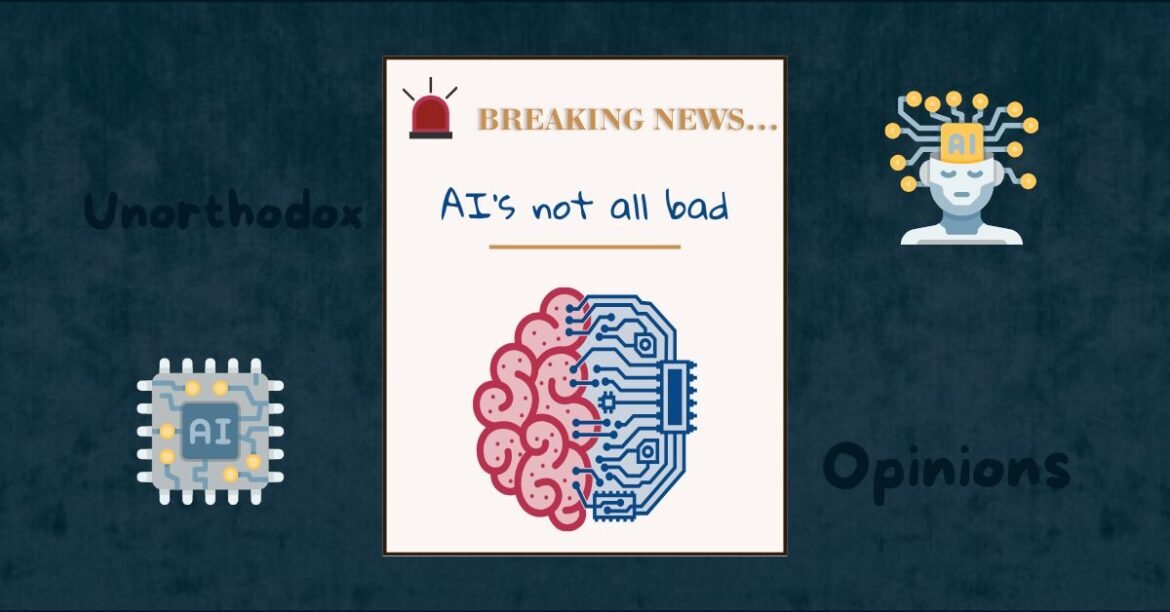
This post reflects on my shifting perspective on AI—from resisting it to recognizing both its benefits and its downfalls. While AI can make things more efficient and accessible, it also raises concerns about misinformation, over-reliance, and the loss of real skills. Ultimately, AI is a tool to be used with balance, not a replacement for human connection, creativity, or original thought.
Table of Contents
- The Realization
- Initial Opinions on AI
- The Workplace vs. School
- AI in College
- What AI Doesn’t Replace
- What Designers Are Experiencing
- The Skill Loss Problem
- The Rise of AI Agents & A Different Perspective
- The Flip Side of AI
- The Importance of Balance
- Conclusion
The Realization
After some deep thought, a deep dive into the ChatGPT system, and a lot of consideration about myself and the world around me, I have come to the conclusion that AI is not all bad—although it’s definitely not all good either. Like most things in life, it comes down to how we use it.
Over the past few years we’ve all seen AI show up in ways many of us never expected. There are now videos online where people can use someone else’s face or voice to create completely fabricated content.
False information spreads quickly, and these fake realities can make it feel like we’re all going a little crazy. AI keeps getting more realistic every day, and it’s natural to wonder: when will this “slop” stop? When will AI evolve into something truly meaningful instead of just chaos?
Despite all this, there are also some real upsides to the development of artificial intelligence.
Initial Opinions on AI
Let’s start from the beginning.
Much like the rest of the population, I was very much against AI at first. Like many people, I didn’t believe it was useful or that it had any real value. I couldn’t understand why people were using it to cheat their way out of doing physical work or learning the skills behind whatever they were studying.
Why rely on a machine instead of gaining real human knowledge and experience?
Because of that, I honestly despised AI for a while. Most of what I heard about it was negative, and it felt like it was encouraging people to avoid real effort.
But my perspective started shifting after I worked as a social media marketing intern for a real estate and home loan company.
It exposed me to just how heavily AI is used in the professional world, especially in marketing and content creation.
The Workplace vs. School
What shocked me the most was the difference between school and the real world.
In my high school, you’re basically supposed to be punished for using AI. Teachers are meant to discourage it completely. They want you to do all the work yourself and develop your own skills.
But that is slowly starting to change globally. Along similar lines to Montessori schools, which offer a child-centered educational approach focused on self-paced, hands-on learning, there are now more private, AI-driven schools beginning to emerge.
Schools like Alpha School in Jackson Township, New Jersey are starting to revolutionize education by using AI tutors for core subjects like math, reading, and science in just two hours daily. This allows for more personalized, accelerated learning while also creating space to focus on real-life skills.
Many children, starting as young as five, are now learning how to write AI prompts and develop software, which can better prepare them for the workforce they will eventually enter.
But in my case entering the workforce and suddenly AI being praised was shocking.
In fact, much of today’s work is done through AI rather than by a person themselves.
At my internship I created short form video scripts using ChatGPT, and I wasn’t even expected to alter them. That was all they expected from me. They didn’t expect me to sit there and come up with content myself—they expected me to use a generative AI system and figure it out there.
Honestly, it felt disrespectful to the effort and brainpower it normally takes to come up with original ideas and creative work. Of course, I wasn’t going to tell my boss I refused to use AI. I was just taking over tasks they usually did themselves.
But it felt strange knowing that the work was basically completed by pressing a few buttons, and the result wasn’t even that high quality.
AI in College
A difference I noticed immediately between high school and college was how similar using AI felt to my prior internship experience.
In most of my online college classes, AI is actually allowed—or even encouraged.
One of my professors included a statement in the syllabus explaining that if we use AI, we simply need to cite how we used it and what system we used.
In my digital marketing class, AI is sometimes considered more efficient when completing certain tasks. For example, we created a landing page design for a discussion post, but the exercise showed that AI alone isn’t great at designing user-friendly layouts.
The human touch is still necessary.
AI might generate the structure, but humans still have to edit, adjust, and improve it.
What AI Doesn’t Replace
With AI becoming normalized in so many industries, it feels like we’re starting to overlook the amount of effort, time, and dedication it takes to develop real creative skills.
AI doesn’t replace the connection and artistry that real creatives bring to their work—copywriters, graphic designers, editors, producers, and many others.
But large companies often don’t care about that deeper value. They care about numbers, output, and return on investment.
If AI is cheaper and faster, then from a business standpoint it makes sense to use it.
For smaller businesses, though, AI can be an opportunity. They might not have the budget to hire professionals for every task, so AI can help them get started.
Still, the difference in quality is noticeable.
Customers can tell.
And it especially hurts professionals who have spent years developing expertise in fields that are now being heavily affected—or even replaced—by AI systems.
What Designers Are Experiencing
Recently I joined a group called The Society of the Sacred Pixel that I found on Reddit. It’s a graphic designer community that anyone interested in the field can join. They typically meet every Sunday at 4 PM Eastern time.
Listening to their conversations has been eye-opening.
Graphic design requires a level of attention to detail and craftsmanship that I can only aspire to develop. But many of the designers in the group talk about how difficult it is to find reliable full-time work now.
At the same time, society expects them to have an endless list of skills.
In the creative industry, you’re often expected to know how to do everything: web design, packaging, illustration, animation, branding, marketing, and more—even if your main focus was supposed to be something simple like designing a logo.
Now imagine adding AI to the mix.
If a system can quickly generate logos, websites, illustrations, and animations, companies start asking: why hire someone when AI can do it instantly?
The Skill Loss Problem
When AI becomes too relied upon, people start losing their own abilities to produce the same work themselves.
Schools often argue that using AI is plagiarism. Even if AI isn’t a person, it still pulls from countless other sources and people’s work.
But the bigger issue is skill loss.
Even something as simple as editing writing becomes harder if you always rely on software to correct grammar, punctuation, and formatting. Over time, you stop practicing those skills yourself.
I’ve definitely caught myself falling into this habit.
It becomes easier to delegate tasks to technology because time is limited. The phrase “time is money” exists for a reason.
But eventually, if you rely on something long enough, you lose the ability to do it without help.
The Rise of AI Agents & A Different Perspective
Recent developments now allow AI to generate and program its own code, evolving beyond just an assistant into something closer to an agent—capable of fulfilling tasks on its own without constant human involvement.
As concerning as that may sound to some, there are also more optimistic perspectives.
In the YouTube video “How AI Slop Will Spark the Next Human Renaissance,” After Skool shares the idea that artificial intelligence may ultimately “only replace the drudgery”—removing repetitive, inhuman work and allowing people to reconnect with their creativity, critical thinking, and sense of purpose.
The video suggests that we may be moving from an economy of quantity to an economy of quality, where meaning becomes more important than mass production. It also emphasizes that true meaning often comes from struggle and lived experience—something AI cannot replicate.
Because of this, the next few years could actually be more promising for those in creative and human-centered industries. As people begin to value authenticity over perfection, there may be a stronger appreciation for raw, real, and human-made content.
The Flip Side of AI
At the same time, AI has also helped me in certain ways.
I’ve used it while editing posts for this blog, brainstorming content ideas, learning new skills, and even exploring ways to create new things or improve existing ones.
When you’re learning something new and don’t have access to a teacher, mentor, or assistant, AI can feel like having someone there to help guide you.
Sometimes it even feels like it’s reading your mind and expanding on ideas you already had.
In those moments, AI feels like a personal assistant and companion, supporting you as you work toward your goals.
The Importance of Balance
The biggest lesson I’ve learned is that AI should be used with balance.
It’s okay to ask AI for help the same way you would ask another person for help. But you have to remember its limitations.
Sometimes it gives wrong answers.
Sometimes it misunderstands the question entirely.
And if you rely on it for everything, you risk losing your own ability to think and create independently.
Conclusion
So after all of this reflection, my conclusion remains the same:
AI is not all bad—but it’s not all good either.
It’s a tool.
Just like search engines, browsers, or any other technology we use daily.
AI can provide ideas, resources, templates, and inspiration. It can help people accomplish things they may not have been able to do alone.
But it cannot replace human creativity, originality, or imagination.
If you want to create something completely new—something the world hasn’t seen before—that still requires your own brain, your own effort, and your own vision.
AI can guide you.
But you are still the creator.
We can’t be replaced, only pushed to evolve, my fellow anomalies. Stay Anomalous. Signing off…
Amirah
LATEST NEWS
Follow For Updates on Future Content
Pintrest: @theanomalysjournal
Instagram / Facebook : @urgirlamirahjocelyn
Spotify: @theanomalyspodcast
Youtube: @ajamadmired
Leave a Reply