Post Summary
If you’re tired of setting New Year’s goals that don’t last, this post is for you. Instead of pushing unrealistic resolutions, it walks you through a more intentional way to reflect, reset, and move forward without burnout. You’ll learn how to use journaling, visualization, and simple rituals to set goals that actually fit your life — and how to give yourself grace as you grow, pivot, and start again throughout the year.
Table of Contents
- Introduction
- Reflection
- Visualization
- Implementation
- Conclusion
Introduction
New Year’s is almost here, and that means it’s time to start preparing your next moves and thinking about how you want to grow in the next year.
I have always been a big New Year’s goals and resolutions person, every new year aiming to achieve the things I may have missed out on in the last. But striving to become your best self doesn’t happen overnight — it takes time, effort, and dedication.
Before 2025 officially wraps up, I want to challenge you to slow down, reflect, and really think about what you want before stepping into this next chapter. Below are three simple but intentional steps to help guide your goals for the new year.
I. Reflection
First comes the mindset shift as the old “new year, new me” mindset — making resolutions on New Year’s night and forgetting about them on New Year’s Day — is not going to slide anymore.
Instead, try shifting your thinking:
- New year, new focus
- New year, new memories
- New year, new direction
Setting goals without intention and proper planning will get you nowhere. You may become a “new you,” but is that new person someone you actually want to become?
Someone you are proud of? Someone your younger self would look up to?
Focus Categories
Some areas you may want to reflect on include:
- Health / fitness
- Career
- Mental health
- Education
- Relationships
- Travel
- Finances
- Entertainment
You can’t move forward without looking back. Reflection allows you to learn from the past instead of repeating it.
Journaling Isn’t About Aesthetics
I’ve been journaling somewhat religiously since around 2021–2022, and from experience, it has helped a lot with regulating my emotions and setting intentions.
One thing I couldn’t care less about while journaling is how pretty my journal looks or how neat my handwriting is.

I’ve tried prompt-based journals and daily habit tracking, but they require way too much energy for me to stick with consistently. Instead, I adopted a brain-dump style whenever I feel the need to write, and that has worked for me. You may think you’re not a writer or that journaling doesn’t work for you, but sometimes you just have to find the routine and style that fits you best.
Some reflection prompts to get started:
- What drained me in 2025?
- What felt easy and aligned?
- What am I proud of, even if no one saw it?
Different journaling styles include:
- Brain dumps
- Prompt-based journaling
- Voice memos
- Video diary entries
Let reflection guide your 2026 goals and help you get more specific about what you want this next period of time to mean for you.
II. Visualization
Once you’ve reflected, visualization helps bring your goals to life.
Manifestation boards and mood boards will become your best friends, as they are powerful tools for staying connected to what you’re working toward.
- Mood boards focus on how you want your life to feel.
- Manifestation or vision boards focus on what you want to achieve.
Every year, I create a vision board on Canva and set it as the background on my devices so I’m reminded daily of my intentions and motivations. If you’re on screens every day, all day, it’s worth keeping your goals visible as a reminder of what you’re working toward.
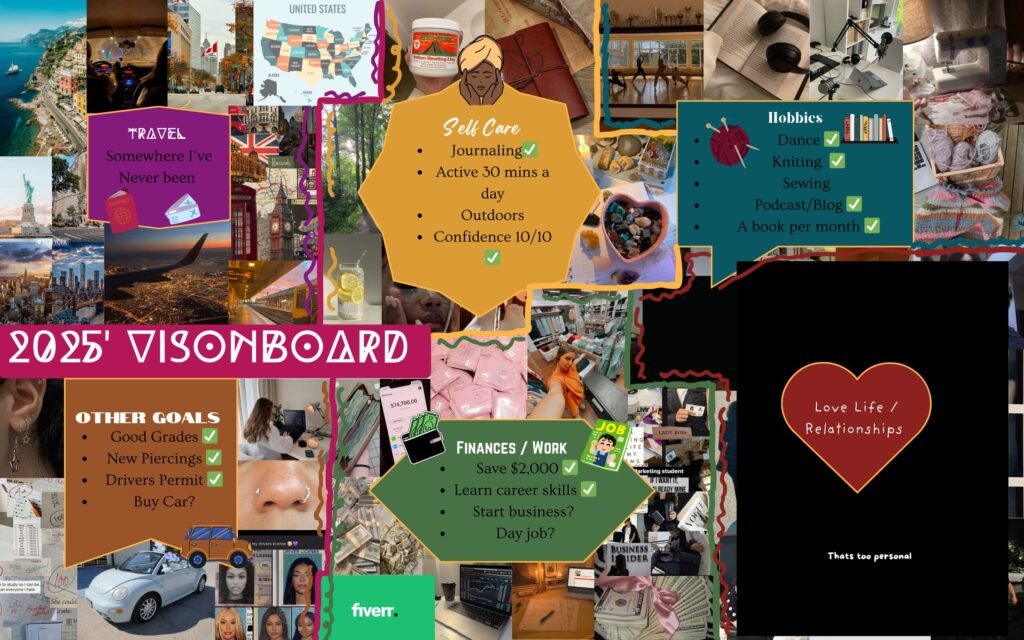
My vision board for 2025
Many of the goals I displayed on my board this year were accomplished simply by physically putting it together, visualizing them, and actively working toward them.
Something i’ve implemented in my vision board is including lists of specific goals that aren’t clearly displayed in addition to pictures so you can check them off at the end of the year!
+ Tip: Including images you feel emotionally connected to adds deeper meaning and purpose to your goals.
“That Girl”
You can also try a activity I call “That Girl” where you write out the exact habits and traits your best self embodies, including how they show up in daily life, and draw them how you picture them looking.
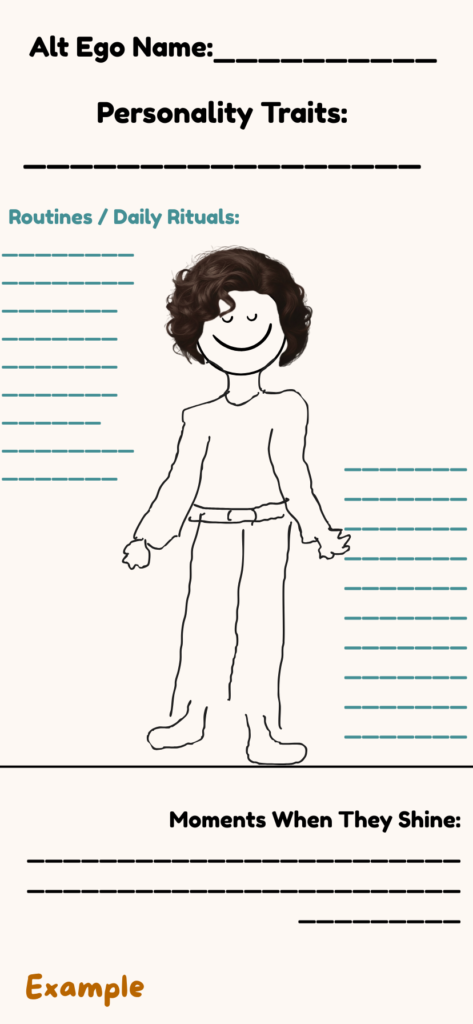
You can even give this version of yourself a name and embody them as an alter ego, using that identity to give you confidence and strength in tough situations where your current self may not feel as capable.
Practices like meditation, visualization, mantras, and breathwork also help connect your goals to your physical presence. Breathwork and regulating your body can help you feel more present, allowing you to fully experience the emotions tied to living the life you desire and you can begin to embody the person you want to become rather than just imagining them.
III. Implementation
Clarity means nothing without action. Implementation is where vision becomes reality.
Instead of viewing the year as one long stretch, think of it in seasons of you — similar to how businesses operate in quarters or how nature moves through seasons. Decide what areas of your life you want to focus on during different times of the year.
Ask yourself what category you want to focus on during certain months, weeks, or even days, and how you’ll spend your time building toward something greater.
USE SMART Goals
Yes, you’re probably tired of hearing this acronym, but it really does help:
- Specific
- Measurable
- Achievable
- Realistic
- Timely
Example:
- Category: Entertainment
- Goal: Replace my YouTube screen time with reading time
- Time given: 30 days or 3 months
(I actually really need to do this myself it’s bad)
Rituals > Resolutions
Rituals are small, repeatable habits that anchor your goals into daily life and make them feel attainable.
Examples include:
- Sunday reset journaling
- Morning intention setting
- Monthly reflection walks
- Full moon or new moon check-ins
It takes about 21 days for habits to feel natural rather than forced. Don’t wait until January 1st — you can start building the life you want now.
Eventually, habits become instinctual — just like picking up your phone in the morning (wether to turn off your alarm clock or to stroll). The choice is whether that habit contributes to a healthier, happier life or keeps you stuck in the same place.
+ side note: if we’re truly going based on seasons, the new year doesn’t really start until winter ends and spring begins. You really have until March to start feeling changes — there’s no excuse for saying, “I already messed up, I’ll try again next year.”
Ask yourself:
- What went wrong?
- What can I learn from it?
- How can I move forward differently?
Conclusion
This guide is meant to show the many ways that reflection, journaling, visualization boards, and rituals can be used as tools to help you accomplish everything you set your mind to. Tools you can return to throughout the year whenever you need clarity, grounding, or a reset.
We are no longer giving up on our goals at the first sign of failure. You’re allowed to start over more than once in pursuit of “new year, new ____.” Fill in the blank with your focus — because it’s about more than just a “new you.”
Affirmation:
I don’t need to rush my becoming. I am becoming the person I envision.
If you want more content focused on self-development, intentional living, time management, and preparing for your next life chapter, check out our Becoming Anomalous page for guidance and inspiration throughout the year.
& come back and leave a comment if this post helped you in reaching any of your goals!
Until next year, my fellow anomalies. Stay Anomalous. Signing off…
Amirah
LATEST NEWS
Follow For Updates on Future Content
Pintrest: @theanomalysjournal
Instagram / Facebook : @urgirlamirahjocelyn
Spotify: @theanomalyspodcast
Youtube: @ajamadmired
Follow For Updates on Future Content
Pintrest: @theanomalysjournal
Instagram / Facebook : @urgirlamirahjocelyn
Spotify: @theanomalyspodcast
Youtube: @ajamadmired
Leave a Reply